
Kostyuchenko O.L. Anti-rash treatment for patients with polyposis rhinosinusitis. – Manuscript. Dissertation for the degree of candidate of medical sciences in the specialty 14.01.19 – otolaryngology. – A.I. Kolomiychenko Institute of Otolaryngology of Academy of Medical Sciences of Ukraine, Kyiv, 2004.
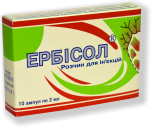
The dissertation is devoted to the substantiation and development of a new technology of treatment of patients with recurrent polyposis rhinosinusitis using an anti-inflammatory immunostimulating agent erbisol, based on the study of the pathogenetic chains of this disease and the possibility of predicting positive results. The reactions of the mucous membrane of the nasal cavity to the local influence of erbisol in the experiment and the peculiarities of its action on the polyposis tissue in vitro were studied. The stimulating effect of the preparation on the processes of synthesis of secretory immunoglobulins by cells of the plasmacytic type and the increase of the number of functionally active macrophages, as well as the enhancement of protective functions of the flashing epithelium, without causing pathological changes in the structures of the studied objects, was determined. Clinical, immunological, cytochemical and biophysical methods have proved the high efficiency of complex application of erbisol in the treatment of patients with polyposis rhinosinusitis. Positive results of research have become the basis for the creation of a method of antirecordial treatment of patients with this pathology, consisting of a local endonazal in the preoperative period and an intramuscular injection of the drug in the postoperative period to stabilize the clinical effect and lengthen the remission period. The proposed method of treatment of patients with polyposis rhinosinusitis using erbisol is highly effective, has no side effects and can be used in both inpatient and outpatient settings.
Polyposis rhinosinusitis is most common in the age group of years (56.44%) in both men and women, which is respectively 31.68 and 32.91%. The main complaints of the patients were: difficulty in nasal breathing (80.56%), mucus-purulent discharge from the nasal cavity (51.67%), inferior sleep (43.33%), and 31.67% of the subjects complained of a different level of smell.
The development of polyps in the mucous membrane of the nasal cavity is characterized by the presence of a pronounced local immunodeficiency, which manifests itself by an increase in the number of proinflammatory cells in the polyposis tissue, a significant decrease in IgA content, an increase in IgG production, and a high level of interleukin-1 in the oropharyngeal secretion of patients.
The course of polyposis rhinosinusitis is accompanied by changes in systemic immunity of patients, as well as increased lipid peroxidation processes and a decrease in antioxidant activity, a disturbance in the balance of the oxidation-reduction system.
The local application of erbisol in the experiment revealed a positive effect of the drug on the functional and metabolic parameters of the structural components of the mucous membrane of the nasal cavity of rats in the absence of negative side effects, which made it possible to use erbisol in antireduction therapy in patients with polyposis rhinosinusitis.
Clinical application of erbisol in patients with polyposis rhinosinusitis caused activation of immune responses, proven by stimulation of phagocytic functions of blood cells, increased production of a and g interferons, an increase in the number of T-lymphocytes, a decrease in the level of interleukin-1, an increase in the concentration of IgA and a decrease of IgG content in oropharyngeal secretion, which is an important indicator of increasing the resistance of the mucous membrane to pathogens.
The use of the method of antirecurring therapy in patients with polyposis rhinosinusitis using erbisol increases the effectiveness of treatment, restores the physiological functions of the nose, provides stable clinical, clinical and immunological and cytochemical results in the distant period.